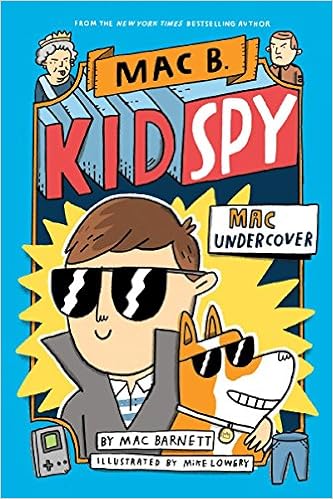
This is default featured slide 1 title

Go to Blogger edit html and find these sentences.Now replace these sentences with your own descriptions.This theme is Bloggerized by Lasantha Bandara - Premiumbloggertemplates.com.

This is default featured slide 2 title

Go to Blogger edit html and find these sentences.Now replace these sentences with your own descriptions.This theme is Bloggerized by Lasantha Bandara - Premiumbloggertemplates.com.

This is default featured slide 3 title

Go to Blogger edit html and find these sentences.Now replace these sentences with your own descriptions.This theme is Bloggerized by Lasantha Bandara - Premiumbloggertemplates.com.

This is default featured slide 4 title

Go to Blogger edit html and find these sentences.Now replace these sentences with your own descriptions.This theme is Bloggerized by Lasantha Bandara - Premiumbloggertemplates.com.

This is default featured slide 5 title

Go to Blogger edit html and find these sentences.Now replace these sentences with your own descriptions.This theme is Bloggerized by Lasantha Bandara - Premiumbloggertemplates.com.

Sabtu, 26 November 2016

Download Mac Undercover (Mac B., Kid Spy #1), by Mac Barnett

Download Mac Undercover (Mac B., Kid Spy #1), by Mac Barnett

The referred publication with the basic creating design, easy to remember as well as understand, and also readily available in this internet site comes to be the minimally advantages to take. In the excellent way, delivering the knowledge for others will certainly make you much better. Additionally, when you additionally appreciate reading this Mac Undercover (Mac B., Kid Spy #1), By Mac Barnett as one of the sources to accumulate, you could also find the specific meaning of this publication.

Mac Undercover (Mac B., Kid Spy #1), by Mac Barnett

Mac Undercover (Mac B., Kid Spy #1), by Mac Barnett


Mac Undercover (Mac B., Kid Spy #1), by Mac Barnett


Download Mac Undercover (Mac B., Kid Spy #1), by Mac Barnett

Collection as well as book shop are 2 vital locations to obtain guides to read. Nevertheless, in modern age, it will certainly not only evoke both places. Several websites are currently offered for the online library. As right here, discovering the thousands of books titles from within and also beyond this nation is simple. You might not only intend to take the book yet likewise informal education. As revealed, library can be an informal education and learning system to spread out the expertise, from any type of resources.

There many books that can be the fashion for getting to the brighter future. It will also include the various styles from literary fiction, socials, company, religions, laws, and several other books. If you are confused to select among the books, you can try Mac Undercover (Mac B., Kid Spy #1), By Mac Barnett Yeah, this publication ends up being a much suggested publication that many people like to read, in every condition.

To earn sure about the book that ought to read, we will certainly reveal you just how this book is really better. You could see how the title is presented. It's so fascinating. You could also see just how the cover layout is program; this is what makes you really feel interested to look much more. You can additionally discover the web content of Mac Undercover (Mac B., Kid Spy #1), By Mac Barnett in a good expiation, this is exactly what makes you, plus to really feel so pleased reading this publication.

For even more intriguing factor, you may not know regarding the content of this publication, may you? Why do not you try to recognize? Comprehending new thing will certainly lead to conceptualize the life better. You might not only check out as the activities, but analysis can be a way making your life run well. By this Mac Undercover (Mac B., Kid Spy #1), By Mac Barnett you can really picture exactly how the life will certainly be as well as ought to be.

Mac Undercover (Mac B., Kid Spy #1), by Mac Barnett

Review

Praise for The Impossible Crime (Mac B., Kid Spy #2): :An instant New York Times bestseller!"Barnett opens his casebook again-this time to solve a classic locked-room mystery...Almost every page contains Lowery's illustrations, loosely drawn and garishly colored in green and orange, which give the whole affair a zany feel that is much enhanced by the narrative with its running gags. Kudos to a pint-size Poirot, pre-Mustache!" - Booklist"Barnett's signature dry wit and snappy back-and-forths, particularly between the ingenuously sincere Mac and the standoffish Queen, keep the story steadily moving forward; a convoluted historical account of Colonel Blood's attempted robbery...Lowery's cartoony spot art, in black, green, and orange, provides additional historical and cultural information and frequently supports the narrative." - Horn Book"Barnett and Lowery team up again in this second outing of international espionage mystery with royal overtones... this is a nifty mystery for young readers and a worthy sequel to the first." - Kirkus ReviewsPraise for Mac Undercover (Mac B., Kid Spy #1):A New York Times bestseller!An Amazon Best Book of 2018* "Barnett and Lowery bring the funny to the serious art of espionage in a perfect interplay of text and illustration...Barnett interweaves tidbits of global history fit for trivia lovers, while Lowery's comic-style images play a key role in the humor...Told with a sense of nostalgia for 1980s history and pop culture, the silliness and originality of this book will hook young readers." -- School Library Journal, starred review"Barnett takes his readers on a fun-filled ride...Barnett's tone throughout the story is humorous, lighthearted, and a little glib, and the over-the-top story is sure to appeal to many readers...an enjoyable romp that will leave readers salivating for the sequel." -- Kirkus Reviews"[Barnett's] riotous series debut as an adult recalling a 1980s childhood caper...goofy, two-color pictures by Lowery (the Doodle Adventure series) ramp up the silliness of this adventure...which should snare even the most hesitant readers." --Publishers Weekly"Barnett's knack for both quirky situational humor and heartfelt sentiment work in tandem to create a balanced-while still outrageous-early-chapter-book caper. Lowery's frequent cartoony black, yellow, and blue spot illustrations are integral to the narrative, providing clues to eagle-eyed readers and enhancing the humor." --The Horn Book"Barnett's series falls squarely in line with works from Jon Scieszka's and Dav Pilkey's oeuvres, offering kids another solid choice for what to read next." -- The Bulletin of the Center for Children's Books"Funny as a crumpet. (But truly, secretly a hundred times smarter.)"--Jon Scieszka, author of Caldecott Honor The Stinky Cheese Man and Other Fairly Stupid Tales and the New York Timesbestselling series Frank Einstein."With a perfectly absurd premise, dialogue that demands outlandish accents, and a plot that interweaves global history and complete silliness, Barnett royally nails it." --Abby Hanlon, author of the Dory Fantasmagory series.Praise for Mac Barnett:[Mac Barnett is] a great young writer of books for young people. If you haven't read his work, run somewhere and do that. Books for young people have a rich and I daresay limitless future--knock anyone who says otherwise into a ditch--and Mac has a central place within that limitless future. Don't bet against him or anyone like him." --Dave Eggers"[In Barnett's books] there is no magic solution to any problem: The characters stumble through their dilemmas just as every one of us does. The world is a difficult yet good place, and there is no need for the typical rose-colored lenses that other children's books put on situations in order to fend off the bad stuff." --Yiyun Li"He is a believer that picture books can have Swiftian absurdity and untidy endings, and that 'life is absurd, and kids know that.'"-- The San Francisco Chronicle

Read more

From the Back Cover

The Queen of England is calling, and she has a secret mission...JUST FOR MAC.My name is Mac Barnett. I am an author. But before I was an author, I was a kid. And when I was a kid, I was a spy. The story you are about to read is true. This actually happened to me. Open this book to find out more about my adventures. But beware--this mission is top secret and very dangerous!

Read more

See all Editorial Reviews

Product details

Age Range: 7 - 10 years

Grade Level: 2 - 5

Lexile Measure: 460L (What's this?)

amznJQ.available('jQuery', function() {

amznJQ.available('popover', function() {

jQuery("#lexileWhatsThis_db").amazonPopoverTrigger({

showOnHover: true,

showCloseButton: false,

title: 'What is a Lexile measure?',

width: 480,

literalContent: 'A Lexile® measure represents either an individual's reading ability (a Lexile reader measure) or the complexity of a text (a Lexile text measure). Lexile measures range from below 200L for early readers and text to above 1600L for advanced readers and materials. When used together Lexile measure help a reader find books at an appropriate level of challenge, and determine how well that reader will likely comprehend a text. When a Lexile text measure matches a Lexile reader measure, this is called a "targeted" reading experience. The reader will likely encounter some level of difficulty with the text, but not enough to get frustrated. This is the best way to grow as a reader - with text that's not too hard but not too easy.',

openEventInclude: "CLICK_TRIGGER"

});

});

});

Series: Mac B., Kid Spy (Book 1)

Hardcover: 160 pages

Publisher: Orchard Books (September 11, 2018)

Language: English

ISBN-10: 133814359X

ISBN-13: 978-1338143591

Product Dimensions:

6 x 0.8 x 8.5 inches

Shipping Weight: 12 ounces (View shipping rates and policies)

Average Customer Review:

4.8 out of 5 stars

37 customer reviews

Amazon Best Sellers Rank:

#8,279 in Books (See Top 100 in Books)

My daughter, who is a beginning reader, finished this book in 3 DAYS! She loved it! I found her giggling frequently while reading this book, and she wouldn’t put it down unless prompted. (Which was funny to do, because I’ve never had to before.) I wanted to say a huge “Thank you,” to the author and illustrator - I believe you have changed my daughter’s life!!

My son LOVED this book. He’s a challenged reader and not one to read unless he’s instructed to. Every night after the book came, I found him in his room reading independently. He really liked the quirky humor and situations in the storyline.

My son is a reluctant reader. He enjoyed this book enough to finish it in 3 days and and for book 2. Love books that my struggling reader devours wanting more.

My son loves to read. A dumb book to read indeed.

High interest story, larger text, engaging graphics.

My child picked it up and started reading it on his own despite the text exceeding his reading skills! I also appreciate its humorously accurate historical recitations.

@kidlitexchange #partnerGiggles and guffaws will resonate during readings of this quirky mystery told by Mac B. (aka the author of the book - Mac Barnett - as a kid, a kid who is also a SPY)! Mac, who lives in California with his mom during the 1980s, is summoned by the Queen of England to help find a missing crown jewel. The succinct and silly dialogue (complete with Queen’s English) matches perfectly with with the doodle illustrations, which adorn every page and are occasionally accompanied by fun hand lettered notes.Barnett’s description of the Queen: “. . . surrounded by twelve corgis . . . wearing a purple dress and a hat of the same color” is complemented by Lowery’s depiction (all the illustrations are rendered in black, light blue, and yellow) of the Queen holding one of the goofy looking corgis, while the other eleven bumble about around her.The quippy humor demonstrates respect for the reader. Unfamiliar language and historical references are briefly explained in the text and further unpacked by the playful illustrations. MAC B: KID SPY is great for readers that enjoy diary series, graphic novels, or the likes of Jon Scieszka. Suitable for ages 8-12.Thanks #kidlitexchange for the review copy of this book! All opinions are my own.

My son is a fan of the Dogman series, the Goosebumps books, and the Diary of a Wimpy kids books. I figured he would enjoy this book, and I was right!The idea of being a spy and the various places all over the world were all fun aspects of this novel. My son is in the 4th grade , and he said it was an easy read. He loved all the doodles. It isn’t a graphic novel, but it definitely has some cool doodles to help keep kids interested. When talking to my son about some aspects of the book , for example the KGB, he didn’t completely understand what it was. He understood that it was a “secret society “. He got the gist.After asking him if he wanted to read the next one, he gave a hearty yes. I always like to hear that.

Mac Undercover (Mac B., Kid Spy #1), by Mac Barnett PDF
Mac Undercover (Mac B., Kid Spy #1), by Mac Barnett EPub
Mac Undercover (Mac B., Kid Spy #1), by Mac Barnett Doc
Mac Undercover (Mac B., Kid Spy #1), by Mac Barnett iBooks
Mac Undercover (Mac B., Kid Spy #1), by Mac Barnett rtf
Mac Undercover (Mac B., Kid Spy #1), by Mac Barnett Mobipocket
Mac Undercover (Mac B., Kid Spy #1), by Mac Barnett Kindle

Mac Undercover (Mac B., Kid Spy #1), by Mac Barnett PDF

Mac Undercover (Mac B., Kid Spy #1), by Mac Barnett PDF

Mac Undercover (Mac B., Kid Spy #1), by Mac Barnett PDF

Rabu, 23 November 2016

Download The Friend: A Novel, by Sigrid Nunez

Download The Friend: A Novel, by Sigrid Nunez

Sooner you obtain guide The Friend: A Novel, By Sigrid Nunez, sooner you can appreciate reading the publication. It will be your resort to maintain downloading guide The Friend: A Novel, By Sigrid Nunez in supplied link. In this method, you could truly decide that is offered to get your personal book on-line. Right here, be the initial to obtain the e-book qualified The Friend: A Novel, By Sigrid Nunez as well as be the first to understand how the writer indicates the message and also knowledge for you.

The Friend: A Novel, by Sigrid Nunez

The Friend: A Novel, by Sigrid Nunez


The Friend: A Novel, by Sigrid Nunez


Download The Friend: A Novel, by Sigrid Nunez

We provide the various book titles from lots of publishers and also libraries worldwide. From which country you are, you could discover your preferred book below. When you want to look after your life, reading book will really help you. This is not simply a task to streamline or invest the moment. This is a have to that can be achieved by obligating the life for better future. It will depend upon exactly how you decide to pick the book in order to select the better advantages.

Currently, we pertain to offer you the right brochures of publication to open. The Friend: A Novel, By Sigrid Nunez is one of the composition in this world in appropriate to be checking out product. That's not only this book provides recommendation, however additionally it will certainly show you the outstanding advantages of checking out a book. Creating your numerous minds is required; furthermore you are sort of people with fantastic inquisitiveness. So, guide is very ideal for you.

Are you thinking about mainly books The Friend: A Novel, By Sigrid Nunez If you are still puzzled on which one of the book The Friend: A Novel, By Sigrid Nunez that must be purchased, it is your time to not this website to look for. Today, you will require this The Friend: A Novel, By Sigrid Nunez as one of the most referred book and also many needed publication as sources, in various other time, you could appreciate for a few other publications. It will certainly depend on your willing demands. Yet, we constantly suggest that publications The Friend: A Novel, By Sigrid Nunez can be a great invasion for your life.

Also we talk about the books The Friend: A Novel, By Sigrid Nunez; you may not discover the published books right here. So many compilations are supplied in soft documents. It will exactly offer you a lot more benefits. Why? The first is that you might not have to bring the book almost everywhere by satisfying the bag with this The Friend: A Novel, By Sigrid Nunez It is for guide is in soft data, so you can wait in gadget. Then, you could open the device everywhere and check out guide appropriately. Those are some couple of benefits that can be got. So, take all advantages of getting this soft documents book The Friend: A Novel, By Sigrid Nunez in this internet site by downloading in link given.

The Friend: A Novel, by Sigrid Nunez

Review

“The contemplation of writing and the loss of integrity in our literary life form the heart of the novel...Nunez’s prose itself comforts us. Her confident and direct style uplifts—the music in her sentences, her deep and varied intelligence. She addresses important ideas unpretentiously and offers wisdom for any aspiring writer who, as the narrator fears, may never know this dear, intelligent friend—or this world that is dying. But is it dying? Perhaps. But with The Friend, Nunez provides evidence that, for now, it survives.” —The New York Times Book Review"Charming... the comedy here writes itself... the novel's tone in general, however, is mournful and resonant... The snap of her sentences sometimes puts me in mind of Rachel Cusk." —The New York Times“In crystalline prose, Nunez creates an impressively controlled portrait of the ‘exhaustion of mourning.’” —The New Yorker“Everywhere in this novel it is impossible to separate love and companionship from loss...The Friend is one of those rare novels that, in the end, makes your heart beat slower.” —Los Angeles Review of Books“A beautiful book … crammed with a world of insight into death, grief, art, and love.” —Wall Street Journal"A penetrating, moving meditation on loss, comfort, memory, what it means to be a writer today, and various forms of love and friendship... Nunez has a wry, withering wit.” —NPR“The book is an intimate, beautiful thing, deceptively slight at around 200 pages, but humming with insight… [an] artfully discursive meditation on friendship, love, death, solitude, canine companionship and the life of an aging writer in New York. Far from being heavy going, this novel, written as a letter to the late friend, is peppered with wry observations, particularly those of a writer stuck teaching undergraduates.” –The Economist “In this slim but pitch-perfect novel, a writer loses her best friend and mentor suddenly without explanation…Wry and moving, The Friend is a love story, a mania story, and a recovery story.” —Vanity Fair “A poignant reflection on loss and companionship.” —Marie Claire “[A] sneaky gut punch of a novel…a consummate example of the human-animal tale…The Friend’s tone is dry, clear, direct—which is the surest way to carry off this sort of close-up study of anguish and attachment.” —Harper's Magazine “A wry riff on Rilke’s idea of love as two solitudes that ‘protect and border and greet each other.’”—Vogue"With enormous heart and eloquence, Nunez explores cerebral responses to loss… The Friend exposes an extraordinary reserve of strength waiting to be found in storytelling and unexpected companionship.” —Minneapolis Star-Tribune "Often as funny as it is thoughtful, The Friend is an elegant meditation on grief, friendship, healing, and the bonds between humans and dogs." —Buzzfeed“A serious book about a big sloppy dog, Nunez’s seventh novel… displays the intellectual heft of her late friend’s work, but also a distinctive sense of humor and narrative momentum.” —Vulture“A brilliant examination of the writer’s life, literary friendship, mortality, bereavement, and our relationship to animals. The novel is not easily summarized; the true rewards of this reading experience are the crystalline prose… Readers will also savor the surprising shifts in narrative focus.” —The Rumpus "An elegant and darkly humorous meditation on grief and companionship, it's a great read — whether or not you're obsessed with canines.” —Shondaland.com“Sigrid Nunez’s novel delivers an enthralling, emotional tale.” —Paste Magazine"The Friend is proof that what we lack is itself a vital part of life — and that loss can lead to meaningful connections found in unlikely places. Sometimes it can take an animal to make a person understand their own humanity. And sometimes a book as unexpected as The Friend can provide as much comfort as any canine companion.” —B&N Review “Quietly brilliant and darkly funny… [The Friend is] rigorous and stark, so elegant—so dismissive of conventional notions of plot—it hardly feels like fiction. Breathtaking both in pain and in beauty; a singular book.” —Kirkus, starred review “Riveting… This elegant novel explores both rich memories and day-to-day mundanity, reflecting the way that, especially in grief, the past is often more vibrant than the present.” —Publishers Weekly “Light, musing, curious, and somehow wonderfully sturdy.” –Vivian Gornick for Bookforum “Brilliant but informal, sad yet laugh-out-loud funny… This beautiful, spare, work will not disappoint.” –Bookpage “Nunez offers an often-hilarious, always-penetrating look at writing, grief, and the companionship of dogs.” —Booklist"The joys of this novel lie in Nunez’s striking capacity to describe the world and its inhabitants, both human and animal. Nunez is a keen observer of behavior, and throughout the text she plants wonderful nuggets that immediately ring true yet still manage to be surprising.” —Michigan Daily “A slow, poignant meditation on grief, rife with pithy literary myths and quotations… Literature nerds, creative writing students, and dog lovers will find this work delightful. Recommended for literary fiction collections.” —Library Journal    “Nunez’s story of a dog and his inadvertent caregiver is a darkly humorous and unsentimental tale of friendship, mourning, and solace.”—Electric Lit “The intensity and elegance of The Friend mean two things—you cannot put it down and you will cry. In a novel about loss and the loneliness of writing and imagination, Sigrid Nunez creates an irresistible tale of love and an unforgettable Great Dane. A beautiful, beautiful book—the most original canine love story since My Dog Tulip.” —Cathleen Schine, bestselling author of They May Not Mean To, But They Do

Read more

About the Author

Sigrid Nunez is the author of the novels Salvation City, The Last of Her Kind, A Feather on the Breath of God, and For Rouenna, among others. She is also the author of Sempre Susan: A Memoir of Susan Sontag. She has been the recipient of several awards, including a Whiting Award, the Rome Prize in Literature, and a Berlin Prize Fellowship. Nunez lives in New York City.

Read more

See all Editorial Reviews

Product details

Hardcover: 224 pages

Publisher: Riverhead Books; 1st Edition edition (February 6, 2018)

Language: English

ISBN-10: 0735219443

ISBN-13: 978-0735219441

Product Dimensions:

5.3 x 0.8 x 8.3 inches

Shipping Weight: 10.4 ounces (View shipping rates and policies)

Average Customer Review:

4.1 out of 5 stars

176 customer reviews

Amazon Best Sellers Rank:

#14,002 in Books (See Top 100 in Books)

I'm not given to writing reviews, but I have to make an exception this time. As is often the case, there's good news and bad.First, the bad. The publishers deserve the firing squad, except since they DID have the good sense to publish the book, they get one star (and the author loses one). This is not a young adult book or one destined to be a best-seller, it's a book for lovers of fiction and the art and craft of writing it. So why, since most of its readers will be individuals wearing glasses, publish it in a font so small and with contrast so weak that some sort of magnification may well prove necessary? They'll have a chance, when preparing the paperback edition, to do better, and I'm writing this solely to encourage them to do that: MAKE IT READABLE.Second, the good. This is an important book. The author has created something original and, by its end, revelatory of how fiction comes to be - indeed, of what fiction IS. The prose style is dry, never poetic. (It's not 'academic' dry, it's 'journalistic' dry.) The plot is slight, and the digressions are many. But it's not - not ever - dull; there's not a wasted word in it. The pace is slow, but it's too interesting to put down. 3/4 of the way through, the author takes the reader on a detour that I was pretty sure was going to turn out to have been a bad idea. It wasn't; she knew exactly what she was doing. It turns out she's a fisherman (fisherperson?) who has been quietly letting out her nets all along, and when she hauls them in, her catch is bountiful. I'm impressed enough with "The Friend" that I'm changing the syllabus for a seminar I'll teach next fall, replacing a tried and true novel with this one, because it's such fine work. Brava, Signora Nunez!Five stars for the author - minus one for the publisher. PLEASE do better with the next edition; this is an important book!

The books I read usually fall into one of two camps: sci-fi/fantasy or LGBT/queer fiction. *The Friend* is about as far from those categories as you can imagine. The setting is contemporary, there's no mention of time travel, and two of the three central characters are straight muggles with benefits.I'm ashamed to admit that I'd never even heard of Nunez before I read *The Friend*. I caught an interview with her on NPR around the time the book debuted. She was so smart and charming and eloquent, I thought I'd give the novel a shot. I was very, very pleasantly surprised.For starters, Nunez is an outstanding writer. Her turns of phrase leave most authors I know in the dust. And yet, she manages to wow the reader without being showy. Her sentences pack a punch, whether or not you majored in English lit.Also, the third major character is a dog. Anyone who knows me knows that I'm a sucker for dogs. Nunez captures the personality of her curious new friend perfectly, and their slowly blossoming love story is...well, it's better than most I can name.

I found this novel written more like a writer's journal to be very moving. It is written in first person and although it has a story line, there is not really much plot. A middle-aged writer, who now teaches writing loses a writer friend who commits suicide. In the past, the friend was also her teacher and briefly her lover. After his death, his huge Great Dane is left grieving and alone, a fate shared by the woman, and so she adopts the dog. Some of the chapters describe an incident, but others are short broken musings. The description of the interaction between the woman and the dog is wonderful, but there is also a great deal of material on thoughts that the friend's death seems to have stirred in the woman. If you like dogs and literature, you would probably like this book, but don;t expect a lot action..

I loved every page of this book. But - fair warning! The dog part of the novel doesn't really start until around page 80. I didn't mind too much because I was enjoying Nunez's writing immensely; still, I was anticipating the dog part of the story. (sometimes I think one would be better off not reading reviews) I thought about the book for days after reading it - the narrator stayed with me, she made me think, and I wished I could sit down with her and have a good long talk. Preferably with a bottle of wine.This is the first book I've read by Sigrid Nunez, and I'm looking forward to reading more of her work.

There is actually little linear movement in this novel. The plot line ebbs and flows around three major themes: the suicide of a former professor/friend/novelist and the shock and grief of this on the protagonist (although the suicide had been married three times and was a sexual predator of his female students including the protagonist), the struggles of writing and teaching writing as professions and the initial forced adoption of the suicide's dog by the protagonist. After a period of adjustment, the dog and his new owner find solace in each other. The name dropping by the author of writers, famous and not so famous regarding writing and death is a bit precious and rather annoying. In the end, the reader is left to wonder: What was the point of all this?

The Friend: A Novel - Very tedious and weighty musings about writers and writing. There's a little bit about grieving the death of a friend and a little bit about a dog, too. A serious literary work with a vague second person narrative. The book did not provide the progression one would hope to appreciate after reading the novel's synopsis.

This is a haunting read, full or ordinary and extraordinary moments. It's more about people than pets or, more precisely, it's what pets do for people and what people do for each other. I haven't recommended a dog book to my dogpark friends for a long, long time, but this book broke my silence. Even if you hate dogs, read this wonderful book.

The Friend: A Novel, by Sigrid Nunez PDF
The Friend: A Novel, by Sigrid Nunez EPub
The Friend: A Novel, by Sigrid Nunez Doc
The Friend: A Novel, by Sigrid Nunez iBooks
The Friend: A Novel, by Sigrid Nunez rtf
The Friend: A Novel, by Sigrid Nunez Mobipocket
The Friend: A Novel, by Sigrid Nunez Kindle

The Friend: A Novel, by Sigrid Nunez PDF

The Friend: A Novel, by Sigrid Nunez PDF

The Friend: A Novel, by Sigrid Nunez PDF

Sabtu, 22 Oktober 2016

Get Free Ebook Empty Planet: The Shock of Global Population Decline, by Darrell Bricker John Ibbitson

Get Free Ebook Empty Planet: The Shock of Global Population Decline, by Darrell Bricker John Ibbitson

Reviewing the book alike is a manner in which will assist you to life much better and open up the new home window on the globe. This sensible word is true. When you open your mind and also try to like analysis, even more expertise, lessons, and experiences are got. So, you could improve your life system and also tasks consisted of the mind and also ideas. And also this Empty Planet: The Shock Of Global Population Decline, By Darrell Bricker John Ibbitson is one of the books that will certainly understand to provide it.
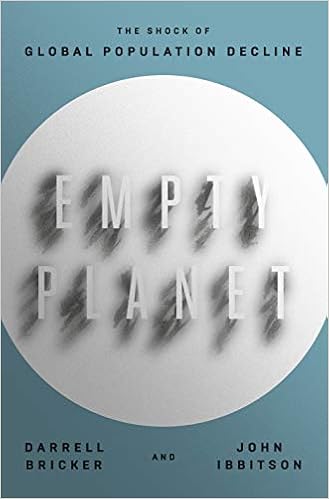
Empty Planet: The Shock of Global Population Decline, by Darrell Bricker John Ibbitson

Empty Planet: The Shock of Global Population Decline, by Darrell Bricker John Ibbitson


Empty Planet: The Shock of Global Population Decline, by Darrell Bricker John Ibbitson


Get Free Ebook Empty Planet: The Shock of Global Population Decline, by Darrell Bricker John Ibbitson

Just what's title of guide to bear in mind always in your mind? Is this the Empty Planet: The Shock Of Global Population Decline, By Darrell Bricker John Ibbitson Well, we will ask you, have you read it? When you have read this book, what do you think? Can you inform others about just what sort of publication is this? That's right, that's so incredible. Well, for you, do you have not check out yet this book? Never mind, you should obtain the experience as well as lesson as the others who have read it. And also currently, we provide it for you.

Checking out is not for other people who obligate or order you to review. The one that can delight in and also make use of the benefits of reading is you. So, it is not kind of worse when you are attempting to be much better by analysis. Also analysis will certainly not lead you to be effective 100%; this way could help you to fulfil the condition, lesson, experience, and also knowledge. Moreover, this book entitled Empty Planet: The Shock Of Global Population Decline, By Darrell Bricker John Ibbitson likewise turns into one that is actually preferred.

The soft documents indicates that you should visit the link for downloading and afterwards conserve Empty Planet: The Shock Of Global Population Decline, By Darrell Bricker John Ibbitson You have possessed the book to read, you have actually posed this Empty Planet: The Shock Of Global Population Decline, By Darrell Bricker John Ibbitson It is uncomplicated as going to the book establishments, is it? After getting this brief description, ideally you can download and install one as well as start to check out Empty Planet: The Shock Of Global Population Decline, By Darrell Bricker John Ibbitson This book is very simple to review every single time you have the leisure time.

Well, when else will certainly you find this possibility to get this book Empty Planet: The Shock Of Global Population Decline, By Darrell Bricker John Ibbitson soft file? This is your good possibility to be right here and also get this fantastic book Empty Planet: The Shock Of Global Population Decline, By Darrell Bricker John Ibbitson Never leave this publication before downloading this soft file of Empty Planet: The Shock Of Global Population Decline, By Darrell Bricker John Ibbitson in link that we provide. Empty Planet: The Shock Of Global Population Decline, By Darrell Bricker John Ibbitson will really make a lot to be your buddy in your lonesome. It will certainly be the best partner to improve your company as well as leisure activity.

Empty Planet: The Shock of Global Population Decline, by Darrell Bricker John Ibbitson

Review

"The authors combine a mastery of social-science research with enough journalistic flair to convince fair-minded readers of a simple fact: Fertility is falling faster than most experts can readily explain, driven by persistent forces."–The Wall Street Journal "The beauty of this book is that it links hard-to-grasp global trends to the easy to-understand individual choices being made all over the world today...a gripping narrative of a world on the cusp of profound change."–The New Statesman “John Ibbitson and Darrell Bricker have written a sparkling and enlightening guide to the contemporary world of fertility as small family sizes and plunging rates of child-bearing go global.”–The Globe and Mail“Arresting. . . lucid, trenchant and very readable, the authors' arguments upend consensus ideas about everything from the environment to immigration; the result is a stimulating challenge to conventional wisdom." –Publishers Weekly, starred review“Warnings of catastrophic world overpopulation have filled the media since the 1960s, so this expert, well-researched explanation that it's not happening will surprise many readers…delightfully stimulating.” –Kirkus Reviews, starred review"Thanks to the authors’ painstaking fact-finding and cogent analysis, [Empty Planet] offers ample and persuasive arguments for a re-evaluation of conventional wisdom."-Booklist “The ‘everything you know is wrong’ genre has become tedious, but this book is riveting and vitally important. With eye-opening data and lively writing, Bricker and Ibbitson show that the world is radically changing in a way that few people appreciate.” –Steven Pinker, Johnstone Professor of Psychology, Harvard University, and author of The Better Angels of Our Nature and Enlightenment Now   “While the global population is swelling today, birth rates have nonetheless already begun dropping around the world. Past population declines have been driven by natural disasters or disease—the Toba supervolcano, Black Death or Spanish Flu—but this coming slump will be of our own making. In this fascinating and thought-provoking book, Bricker and Ibbitson compellingly argue why by the end of this century the problem won't be overpopulation but a rapidly shrinking global populace, and how we might have to adapt.” —Lewis Dartnell, Professor of Science Communication, University of Westminster, and author of The Knowledge: How to Rebuild our World from Scratch   “To get the future right we must challenge our assumptions, and the biggest assumption so many of us make is that populations will keep growing. Bricker and Ibbitson deliver a mind-opening challenge that should be taken seriously by anyone who cares about the long-term future — which, I hope, is all of us.” –Dan Gardner, author of Risk and co-author of Superforecasting: The Art and Science of Prediction   “A highly readable, controversial insight into a world rarely thought about—a world of depopulation under ubiquitous urbanization.” –George Magnus, author of The Age of Aging and Red Flags: Why Xi's China is in Jeopardy"This briskly readable book demands urgent attention."–The Mail on Sunday "A fascinating study.”–The Sunday Times“Refreshingly clear and well balanced.”–Literary Review

Read more

About the Author

DARRELL BRICKER is chief executive officer of Ipsos Public Affairs, the world's leading social and opinion research firm. JOHN IBBITSON is writer at large for the Globe and Mail, Canada's national newspaper. Successful authors on their own, their first collaboration was on The Big Shift, a study of change in Canadian politics that became a #1 national bestseller.

Read more

See all Editorial Reviews

Product details

Hardcover: 304 pages

Publisher: Crown (February 5, 2019)

Language: English

ISBN-10: 1984823213

ISBN-13: 978-1984823212

Product Dimensions:

6.3 x 1.1 x 9.3 inches

Shipping Weight: 1.1 pounds (View shipping rates and policies)

Average Customer Review:

3.8 out of 5 stars

24 customer reviews

Amazon Best Sellers Rank:

#19,870 in Books (See Top 100 in Books)

Anybody who has been paying attention has long grasped the truth: underpopulation, not overpopulation, is our problem. This will soon be true on a global scale, it is already true in most of the developed world. "Empty Planet" explains why this is undeniably so. Unfortunately, the explanation is shrouded in confusion and ideological distortion, so the authors are never able to provide a clear message. Instead, they offer rambling, contradictory bromides combined with dumb “solutions” until the reader throws his hands up in despair, as I did. But then I got a stiff drink, finished the book, and now am ready to tell you about it.The authors, two Canadians, Darrell Bricker and John Ibbitson, offer an apparently complete story. Every part of the world is becoming more urbanized. Urbanization causes a drop in the fertility rate, for three reasons. First, when off the farm, children are a cost center, rather than a profit center. Second, urbanized women choose to have fewer children. Third, urbanization means atomization of social life, such that the networks in which people were embedded, most of which exercised pressure to have children, disappear, and if replaced, are replaced by friends or co-workers who do not exercise the same pressure. “Family members encourage each other to have children, whereas non-kin don’t.” These causes of population decline are exacerbated by two other factors not tied to urbanization—the worldwide decline of religious belief, and lower infant and child mortality, which means people don’t have children as insurance. And the end of the story is that when the fertility rate drops far enough, it is, in the modern world, permanent. It is the “fertility trap,” analogous to the well-known “Malthusian trap.”Why do urbanized women choose to have fewer children (aside from the other two stated reasons, expense and less family pressure)? The authors cite the desire for a career; the desire for autonomy and empowerment; the desire to escape the control of men; and the desire for “crafting a personal narrative.” All of these things the authors tie to “education,” or, in their unguarded moments and more accurately, “being socialized to have an education and a career.” That is, modernity leads to women choosing to have fewer children, often no children at all, and far fewer children than are necessary to replace the people we have now.Why the fertility trap? It’s due to two totally separate causes. One is mechanical—if a society has fewer children, obviously there will then be fewer women to bear new children. But the other is social. When there are fewer children, “Employment patterns change, childcare and schools are reduced, and there is a shift from a family/child oriented society to an individualistic society, with children part of individual fulfilment and well-being.” In other words, it’s not a trap, it’s a societal choice. Interestingly, according to the authors, drops in the fertility rate, and therefore the fertility trap, are not the result of legalized abortion and easy contraception, as can be seen from examples of fertility problems prior to the 1960s. For example, the birth rate was briefly at less than replacement in much of the West prior to World War II, when contraception was much less common, and abortion very much rarer (it is a total myth that illegal abortion was widespread prior to the modern era, at least in the West). But abortion and contraception certainly contribute to the fertility trap. That is, it is societal factors that cause the fertility rate to drop, but all else being equal, the easier it is to prevent (or kill) children, the harder it is to climb back up. In any case, the result is the same—fewer people, getting fewer."Empty Planet" then sequentially examines Europe, Asia, Africa, and South America. There is a great deal of annoying repetition. Nonetheless, there is also much interesting data, all in support of the basic point—population everywhere is going to go down, soon and fast. True, the United Nations predicts that global population will top out at eleven billion around 2100, and then decline. The authors instead think, and make a compelling case that, the United Nations overstates fertility in the twenty-first century. The authors say, and do a good job demonstrating why, population will top out at nine billion by around 2050 (it is seven billion now) and then decline. Some declines will be precipitous and startling—China, currently at 1.4 billion but deep into the fertility trap, will have 560 million people by the end of the century. Strangely, the authors do not calculate global population estimates around, say, 2150, but eyeballing the numbers, it appears they will be around two or three billion, maybe less—and heading downward, fast.Bricker and Ibbitson are not kind to overpopulation doomsayers. They note how completely wrong those of the 1960s and 1970s, such as the infamous Paul Ehrlich, have been proven. (Charles Mann does it better in his excellent "The Wizard and the Prophet"). Bizarrely, Ehrlich is unrepentant, to a degree that suggests he is unhinged; the authors quote him as saying in 2015, without any reasoning, “My language would be even more apocalyptic today,” and analogizing children to garbage. They don’t believe modern doomsayers are any more correct. Most just have no factual basis for their claims, which are basically just anti-human claims of a religious nature, and the authors even dare to note the obvious fact that the United Nations, a device primarily used to extract money from the successful economies of the world and give it to the unsuccessful, has a vested interest in exaggerating the problems of the backward parts of the world.So what problems result from an aging and then declining global population? Economic stagnation is what the authors focus on. This is driven by less consumer demand, but also, less visibly but more importantly, by less dynamism. Old people are takers, not makers. Moreover, they don’t do anything useful for driving society forward, let’s be frank. Not that the authors are frank; they skip by the dynamism problem without much comment, though at least they acknowledge it. But the reality is that for human flourishing, the dynamism of the young is everything, and far more important than consumer demand. One just has to think of any positive accomplishment that has changed the world, in science, art, exploration, or anything else. In excess of ninety percent of such accomplishments have been made by people under thirty-five. (Actually, by men under thirty-five, for reasons which are probably mostly biological, but that is another discussion.) The simple reality is that it is the young who accomplish and the old who do not. And when you have no young people, you have no accomplishments. Our future, on the current arc, is being the Eloi; hopefully there will be no Morlocks.Governments from Germany to Iran recognize this problem. The authors give numerous examples, all failures, of trying to resolve the problem by, in effect, begging and paying women to have children. Even here, the authors feel obliged to tell us “The idea of governments telling women they should have more babies for the sake of the nation seems to us repugnant.” We are not told why that should be so, probably because it is obviously false, but regardless, it is clear that a modern government merely instructing or propagandizing women isn’t going to do the trick.What is the authors’ solution, then? They don’t have one. Well, they have a short-term one, or claim to. Much of the back half of the book is taken up with endless variations on demanding that the West admit massive amounts of Third World immigrants. The claimed reason for this is necessity—without immigration, Europe and North America will not have enough taxpayers to support the old in the style they desire. They realize the disaster that’s befallen Europe by admitting alien immigrants with nothing but their two hands. (They claim to reject the Swedish “humanitarian” model. But all their soaring language of untethered and unexplained moral duty implicitly endorses the humanitarian model.) Instead, they recommend the Canadian system to America, where only the cream of the crop, educated and with job skills, is admitted—but we must, must, must immediately admit no fewer than 3.5 million such immigrants every year. And, of course, they fail to point out that the cream of the crop is by definition a tiny percentage of the overall amount of immigrants, so how exactly we are going to welcome only these worthwhile immigrants is not clear, especially if other countries are competing for them. Nor do the authors point out that at best, this is a short-term solution—if every country in the world will soon have a less-than-replacement birth rate, emigration will soon enough become rare, so no amount of competition will attract enough people. Therefore, their “solution” is no solution at all, and beyond this, Brickell and Ibbitson have nothing to offer, except muttering about how it’ll be nice to have a cleaner planet when there are no people to enjoy the clean planet.I note that the authors do not tell us how many children they have, which seems highly relevant. If you are going to be a prophet, best inspect your own house, or acknowledge that others will find it relevant. If you dig, Bricker has one child, a daughter. Ibbitson appears to have no children. I cannot say why, of course, and it would be unfair to assume a selfish choice. But whatever the reason, it is undeniably true that as a result they have less investment in the future than people with children. (Since you ask, I have five children. I am part of the solution, not part of the problem.) Maybe this is why finding a solution isn’t very important to them.The book has many annoying inaccuracies that seem to be endemic among this type of popular writing, where editors appear to be permanently out to lunch. It is not true that the nursery rhyme “Ring Around the Rosie” refers to the Black Death. The authors offer a half-page so parsing the rhyme, but that’s an urban legend—the rhyme first appeared around 1800. (Even Snopes, the left-wing political hack site notorious for lying propaganda, is correct on this, probably because there is no political element.) The word “dowry” only refers to payments made to the groom’s family; similar payments made to the bride’s family are “bride price.” The G.I. Bill did not create the American interstate highway system. The term is “cleft palate,” not “cleft palette.” India’s economic stagnation for decades after independence was not due to “protective tariffs”; it was, as everybody who is not a Marxist admits, due to socialism, exacerbated by refusal of outside capital, along with the Permit Raj. (Tariffs make perfect sense for many developing countries that rely on import substitution to grow their economies; both the Britain and the United States used them extremely successfully.) The fifteenth-century Portuguese caravel was not based on Muslim technology. The wave of migrants into Europe that peaked (maybe) around 2016 was economic, not because of war, and not a single person in Europe believes what the authors repeatedly claim, that most of those people will return to their countries of origin soon. Or ever. Sloppiness of this type makes the reader wonder about the other, more critical, factual claims in the book.So that’s "Empty Planet." All of it could have been said in twenty or thirty pages. On the surface it’s a pat story, though one without a happy ending. That’s not for the authors’ lack of trying to be happy. Normative judgments abound, all of them oddly in tension with the gloomy top-level attitude of the book toward the problem of underpopulation. Thus, the authors assume that large populations are necessarily terrible for anyone who lives there; adjectives such as “miserable” abound for any people born in a high birth-rate country. Not for them any acknowledgement of Angus Deaton’s point in "The Great Escape" that people in poor countries are generally very happy. All population control is referred to with adjectives such as “beneficent.” We are didactically instructed that “Sex education and birth control [are] good things in and of themselves.” And in what may be the single most clueless paragraph in a book chock full of them, the authors offer this:Small families are, in all sorts of ways, wonderful things. Parents can devote more time and resources to raising—indeed, cossetting—the child. Children are likely to be raised with the positive role models of a working father and working mother. Such families reflect a society in which women stand equally, or at least near equally, with men in the home and the workplace. Women workers also help to mitigate the labor shortages produced by smaller workforces that result from too few babies. It isn’t going too far to say that small families are synonymous with enlightened, advanced societies.Given that the entire point of the book is that small families are a disaster for humanity, even though they try to deflect this obvious conclusion by unpersuasive and unsupported claims such as “Population decline isn’t a good or a bad thing,” this type of thing suggests, to be charitable, cognitive dissonance. Not to mention that cosseting children is not a good goal, although it’s not surprising that two people with one child between them think so, and that sending more women to work outside the home when sending women to such work is part of the problem seems, um, counterintuitive. But as we will see, this paragraph gives us a clue to what is really driving human population collapse.Let’s try to figure out what’s really going on, because despite seeming to be so, the authors’ story is not complete. If you look at the story from another angle, not the one of received wisdom, strange unexplained lacunae appear within the text. The fertility rate in the United States and Britain begin to drop in the early 1800s, but only at the end of the 1800s on the Continent, even though urbanization came sooner in the latter, and the United States was almost all agricultural in the early 1800s. “In France, oddly, fertility declines were already underway by the late 1700s. No one is sure why. . . .” “Fertility rates appear to have increased in France and Belgium during the Second World War, even though both countries were under German occupation or control and supplies such as food and coal were increasingly scarce.” Some countries that are largely poor, uneducated, and not urbanized (Brazil, Mexico, Uruguay) have extremely low fertility rates, while other, very similar-seeming countries still have high rates (Paraguay, Honduras, Guatemala). Uneducated Brazilian favela dwellers, normally the type of people who have lots of children, have experienced a big drop in fertility. And on, and on, strange tidbits that jut out from the authors’ narrative, not fitting into the just-so story of urbanization followed by an inevitable and necessary choice to stop having children.What could explain all these facts? The authors certainly don’t know. But I do. What brings together all these seeming outrider facts, and in the darkness binds them, is the inevitable human tendency toward selfish self-interest. Once this was universally recognized as vice, but it has always been recognized as a large part of what drives human beings unless we struggle against it. The creation of virtue, through self-discipline, self-control, and, in Christian thinking, caring for others at our own expense, aiming at true freedom and the common good, was once the ideal. Virtue helped control our baser impulses, and was the goal toward which a good and well-formed person was expected to strive and to lead others. It was, and is, the opposite of “living as one likes,” of the quest for supposed emancipation. Having children is among the least selfish and most self-sacrificing things a woman, and to a lesser extent a man, can do; thus, when being selfish and self-centered both become exalted, we have fewer children. It is not a mystery.How did we get here? As the result of two late-eighteenth-century developments. The first, the fruit of the Scientific Revolution and the Industrial Revolution, is wealth. I have pondered elsewhere whether a rich society can ever stay a virtuous society, and population decline is merely a subset of this question. The second, the fruit of the Enlightenment (which had nothing to do with the Scientific Revolution or the Industrial Revolution), is the exaltation of individual autonomy, of self-actualization as the goal of human existence. The problem with urbanization and its impact on birth rates, especially in the West, is not something inherent to urbanization, but that city dwellers are more wealthy (or at least exposed to wealth) and have, in practice, fallen prey more easily to Enlightenment ideas.Either of these anti-virtue developments can crash fertility by itself. Combined, they are lethal to human progress. For example, a rich society, such as Venice in the 1600s, can never undergo the Enlightenment, but wealth alone will lead to depopulation, as virtue fades and pursuit of self becomes exalted. And a poor and not urbanized society, such as late 1700s France or early 1800s America, can experience an ideological erosion of virtue solely through embracing Enlightenment principles. Or, to take a more modern example, the South American countries with high rates of fertility are those that are still strongly Christian, and hew to the Christian virtues. The authors themselves note this correlation, but gloss over the implications. Similarly, poor Brazilians are not converted to the gospel of self directly by Rousseau and Locke, or by wealth, both of which they totally lack, but indirectly by both—by obsessive watching of telenovelas, the plots of which, as the authors note, “involve smaller families, empowered women, rampant consumerism, and complicated romantic and family relationships.”For a final set of proofs, it is obvious from Empty Planet’s own statistics, though apparently not obvious to the authors themselves, that as the material blessings of the West finally spread around the world, fertility rates drop in tandem with adoption of the West’s techniques for acquiring wealth, further exacerbated when countries adopt Enlightenment values. And to the extent the country’s elite push back against Enlightenment values, such as in Hungary and Russia, some progress can be made in increasing birth rates. Similarly, when a country’s people experiences shared challenges, social pressure against atomized Enlightenment individual autonomy can increase greatly, resulting in more children. Such was apparently the case in wartime Belgium and France. It is also why Jews in Israel, alone among advanced economies, have a birthrate far in excess of replacement, even if you exclude the Orthodox. They value something beyond their own immediate, short-term desires, which counterbalances the natural human tendency towards vice.[Review completes as first comment.]

I cannot recommend this book. The subject is one that I know well and have studied professionally around the world. Although the facts this book presents are mostly accurate, they are highly selective and presented along with strong opinions about the political implications as though no other point of view can be credible. This book is a form of propaganda, masquerading as information.Fertility declines are due to multiple factors, but the authors only include causes that fit their argument. They never mention or quantify the impact of abortions on the falling fertility in the US (the number of abortions is about equal to the number of immigrants that replace the unborn). The authors mention that fertility has declined the most in black communities but fail to acknowledge this is because of higher rates of abortions among blacks.Nor do the authors assess the causes of fertility decline objectively. Women’s empowerment is claimed to be a root cause of declining fertility. In fact, fertility falls especially fast in Latin America where female empowerment is limited. They describe the fall in foreign adoptions as a trend, though actually it is due to the Hague Treaty that almost completely ended foreign adoptions by cutting off the prior path to citizenship for adopted children. A reader that is new to the subject would never be able to discern when they were getting the whole truth, and the authors work hard to conceal this.The authors skip over the negatives of the mass migration they prescribe. They don’t mention the huge disenfranchised underclasses that have been created in Asia and the Middle East based on the policies they recommend. Nor the emergence of similar underclasses in California today. They don't mention the impossibility of enforcing the rule of law when transnational criminal organizations exploit open borders. They even fail to present the positives of Japan's choices to preserve their homogeneous society, despite that fact that Japan continues to pursue this policy and must see some benefit.These Canadian authors present the Canadian approach as a panacea. They don't acknowledge the Canadian situation is unique geographically, because the United States provides protection through strategic depth. Critically, the Canadian immigration system is merit based, but they fail to include this in their prescription. Instead that authors answer is simply to resist Donald Trump and any political point of view that attempts to protect the interests of a country’s citizens.What I found most offensive was that they didn’t make a recommendation and try to defend it, rather they gave a prescription as though they know more than the rest of us and have higher moral standards than we can only accept as absolute. I found the unscholarly, ideological mindset of the authors sickening.This is an important topic that deserves a fact-based discussion. But for that discussion to be helpful, options need to be considered objectively and pros/cons acknowledged from the perspectives of all constituents. Instead we get selective facts to fit a predefined narrative with extensive condescending rants, hurling insults at those that would questing their prescription in any way.

Empty Planet: The Shock of Global Population Decline, by Darrell Bricker John Ibbitson PDF
Empty Planet: The Shock of Global Population Decline, by Darrell Bricker John Ibbitson EPub
Empty Planet: The Shock of Global Population Decline, by Darrell Bricker John Ibbitson Doc
Empty Planet: The Shock of Global Population Decline, by Darrell Bricker John Ibbitson iBooks
Empty Planet: The Shock of Global Population Decline, by Darrell Bricker John Ibbitson rtf
Empty Planet: The Shock of Global Population Decline, by Darrell Bricker John Ibbitson Mobipocket
Empty Planet: The Shock of Global Population Decline, by Darrell Bricker John Ibbitson Kindle

Empty Planet: The Shock of Global Population Decline, by Darrell Bricker John Ibbitson PDF

Empty Planet: The Shock of Global Population Decline, by Darrell Bricker John Ibbitson PDF

Empty Planet: The Shock of Global Population Decline, by Darrell Bricker John Ibbitson PDF

Minggu, 16 Oktober 2016

PDF Ebook Nolo's Quick LLC: All You Need to Know About Limited Liability Companies (Quick & Legal)

PDF Ebook Nolo's Quick LLC: All You Need to Know About Limited Liability Companies (Quick & Legal)

Why should assume much more? Reading a book will not invest or squander your time, will you? You could truly establish your time to take care of when as well as where you could take pleasure in reading this publication. Even you still have the other duties or books to review, you can additionally make inter-spaced to try analysis this book. It will really enrich your mind and idea. So, if there is a better book to check out, why don't try it? Allow improve your thought as well as experience of reviewing many books from the broads.

Nolo's Quick LLC: All You Need to Know About Limited Liability Companies (Quick & Legal)

Nolo's Quick LLC: All You Need to Know About Limited Liability Companies (Quick & Legal)


Nolo's Quick LLC: All You Need to Know About Limited Liability Companies (Quick & Legal)


PDF Ebook Nolo's Quick LLC: All You Need to Know About Limited Liability Companies (Quick & Legal)

Nolo's Quick LLC: All You Need To Know About Limited Liability Companies (Quick & Legal). In undergoing this life, lots of people always attempt to do as well as get the most effective. New knowledge, experience, driving lesson, and every little thing that can enhance the life will certainly be done. Nonetheless, several people sometimes really feel puzzled to obtain those things. Really feeling the limited of encounter and also sources to be far better is among the does not have to own. Nonetheless, there is an extremely simple point that could be done. This is what your teacher always manoeuvres you to do this. Yeah, reading is the response. Reviewing a book as this Nolo's Quick LLC: All You Need To Know About Limited Liability Companies (Quick & Legal) and also other referrals can improve your life quality. Exactly how can it be?

Really feeling tired after doing some activities in getaways will buy you to have relaxation for some minutes. It will certainly likewise help you to meet the cost time. When you could appreciate your time for relaxation and also neglect the view around you, it is the best time to have likewise reviewing. Yeah, reading book comes to be an extremely perfect idea to do now. Yet, do are you really feel unusual not to bring particular book?

Those are several of the advantages to take when getting this Nolo's Quick LLC: All You Need To Know About Limited Liability Companies (Quick & Legal) by on the internet. But, how is the method to obtain the soft file? It's extremely best for you to visit this page due to the fact that you can obtain the link page to download the publication Nolo's Quick LLC: All You Need To Know About Limited Liability Companies (Quick & Legal) Simply click the web link given in this post and goes downloading. It will not take much time to obtain this e-book Nolo's Quick LLC: All You Need To Know About Limited Liability Companies (Quick & Legal), like when you have to go for book shop.

If you love this sort of publication, simply take it as soon as possible. You will certainly have the ability to offer more information to other individuals. You might also find brand-new things to do for your daily activity. When they are all served, you could create new setting of the life future. This is some parts of the Nolo's Quick LLC: All You Need To Know About Limited Liability Companies (Quick & Legal) that you can take. And when you truly need a book to read, pick this book as great recommendation.

Nolo's Quick LLC: All You Need to Know About Limited Liability Companies (Quick & Legal)

Review

"Mancuso provides advice on how and why to form an LLC and gives guidance on dealing with members capital and profits interest, taxation or profits management, paperwork, and soliciting legal and tax help." Reference & Research Book News

Read more

Book Description

If you run your own business, you’ve probably heard about limited liability companies. Cheap to set up and easier than a corporation to maintain, LLCs are more popular than ever. Business owners who operate LLCs aren’t personally liable for business debts, so their personal assets aren't at risk―not usually, anyway. Before you form an LLC, you should understand the exceptions to this rule to make sure an LLC is right for you. Nolo's Quick LLC provides essential information on LLC laws and trends for business owners in every state. In concise, plain English, America's LLC expert explains the advantages and drawbacks of forming an LLC – including limiting your personal liability.

Read more

See all Editorial Reviews

Product details

Series: Nolo's Quick Llc

Paperback: 224 pages

Publisher: NOLO; Ninth edition (February 27, 2017)

Language: English

ISBN-10: 1413323472

ISBN-13: 978-1413323474

Product Dimensions:

7 x 0.8 x 9 inches

Shipping Weight: 12 ounces (View shipping rates and policies)

Average Customer Review:

5.0 out of 5 stars

1 customer review

Amazon Best Sellers Rank:

#982,815 in Books (See Top 100 in Books)

“The limited liability company (LLC) is a relatively new business ownership structure that combines the best features of the corporation and the partnership. It gives small business owners corporate-style protection from personal liability while retaining the pass-through income tax treatment enjoyed by sole proprietorships (the legal term for one-person businesses) and partnerships.” LLC owners are called members.To determine if an LLC is the best fit for your business, the author explains the advantages and disadvantages of various business structures in comparison to LLCs, including sole proprietorship, general partnership, limited partnership, C corporation, S corporation, RLLP, Series LLP, L3C, and benefit corporations.Member’s Capital and Profits Interests. “When LLC members receive a capital interest in an LLC in exchange for cash, property, or services, they also get a share of its profits and losses, called their distributive share. You’ll see the term ‘distributive share’ a lot in IRS publications and tax forms: It refers to how much of the LLC’s profits and losses will be allocated to each LLC owner at the end of the year. It is a bit of a misnomer, because under the pass-through tax rules an LLC’s owners are taxed on all of the profits allocated to them at the end of each LLC tax year, even if these profits are not actually distributed… An owner’s distributive share in sometimes also referred to as his or her ‘profit interest’ in the LLC.”Note: “Whenever LLC members sign an operating agreement that issues a capital interest to a member in exchange for services, that member must pay income tax for the value of those services as recorded on the LLC’s books.”“When it comes to actually paying out profits to the members, LLCs do have to pay attention to a few legal rules… In general, a distribution is valid if, after the distribution: the LLC remains solvent—that is, the LLC will be able to pay its bills as they become due in the normal course of business, and LLC assets remain equal to or exceed LLC liabilities (in some states, a statute sets out higher asset-to-liability ratio that the LLC must be able to satisfy after distributing profits)… Courts may ignore limited liability if these standards are ignored and the company is later sued. Members or managers who approve a distribution in violation of statutory standards can be held liable for the amount of the invalid distribution.”Special Allocations. “Your operating agreement can provide that profits and/or losses be distributed in a manner that is not proportionate to capital interests. For example, an LLC member with a 30% capital interest could receive 40% of the yearly profits. The ability to mete out allocations of profits and losses in different ways is one of the special advantages of setting up an LLC (or a partnership)… Allocating profits and losses in a way that is disproportionate to members’ capital interests is called making special allocations under the tax law. Such divisions are subject to IRS tax rules.” The author explains the safe harbor rules for special allocations. One of these requirements is, “when an owner sells his or her interest, or the LLC is sold or liquidated, members with a negative capital account balance must restore their account to a zero balance… If you adopt this type of provision in your operating agreement, however, you have waived your limited liability protection, because you are personally agreeing to repay any deficit.”Pass-through taxes. “Like partnerships and sole proprietorships, an LLC is automatically recognized by the IRS as a pass-through tax entity.” This means that all of the business’s profits and losses pass through to the owners’ individual tax returns, thus avoiding the double taxation experienced when a corporation is taxed on profits and then shareholders are taxed again when any of those profits are distributed as dividends. “Many new businesses lose money in their first year or two. Fortunately, LLC members (like owners of partnerships) can subtract their LLC losses from their taxable income (assuming IRS rules are met).”“LLC members who receive a share of LLC profits are not normally treated as employees, but the LLC must withhold income tax on any guaranteed payments made to members. Ask your tax adviser if you have questions.”Corporate tax option. Although most LLC owners will stick with pass-through tax status, they have the option of being taxed as a corporation. The reason to do this is that “income splitting” could reduce overall taxes, particularly in companies where a significant portion profits are retained to fund growth of the firm. Members will pay personal income tax on any salary and bonuses they are paid. These are business expenses that will reduce the LLC’s taxable earnings. Any remaining profits would be taxed at the corporate rate, which is often lower than the marginal rate of the individual owners.“If you form an LLC and decide that you want your LLC to be taxed like a corporation, you must file IRS Form 8832, Entity Classification Election… Once a business makes a corporate tax election, it normally cannot change its tax status back to pass-through treatment for at least five years.”“Corporate capital gains tax treatment, corporate loss carryover treatment, and other technical corporate tax provisions are different from the rules that apply to pass-through LLCs. For example, corporations often must pay double taxes when they are liquidated. Also, corporations typically can’t pass tax losses through to owners—these losses normally stay with the corporation. You will want to thoroughly review these issues with a knowledgeable tax advisor before electing corporate income tax status.”Filing Fees. “One disadvantage to forming an LLC rather than a partnership or sole proprietorship is that you‘ll have to pay a filing fee when you file your articles to create your LLC. But in most states, the fees are modest (although the states of Massachusetts, Illinois, and Texas, among a few others, sock it to new LLCs)… Some states do, however, have larger recurring annual fees… California, for example, charges an annual minimum franchise tax of $800, plus an additional ‘total income’ fee (calculated on gross income plus the cost of goods sold, paid, or incurred in connection with the trade or business) that can reach up to $12,000 per year for high-income LLCs.”LLC Management. “Under most states’ legal rules, all LLC members are automatically equally responsible for managing the LLC… In LLC legal jargon, this arrangement in called member management. But there is another possible LLC management approach—manager management—by which LLC members can choose one or more members and/or nonmembers to manage their LLC. In most states you must specify whether your LLC is member- or manager-managed in the organizational paperwork (your LLC articles or certificate) you file with the LLC filing office… A few states call the managers governors.” Examples of scenarios in which manager-management makes sense include: some members are investors with no active role in managing the firm; LLC members hire a CEO; an outsider is willing to loan the LLC money in exchange for a say in management decisions; the sole member gives membership interests to nonmanaging family members.Keep in mind, “any member of a member-managed LLC, or any manager of a manager-managed LLC, can legally bind the LCC to a contract or business transaction. In other words, each of these people is an agent of the LLC, and can single-handedly commit the entire LLC to a contract or business deal.”“In a co-owned LLC, the managers (either its members in the case of a member-managed LLC or its specially appointed managers in the case of a manger-managed LLC) have a legal obligation to manage the LLC in good faith and in the best interests of the LLC and its members. This is known as their ‘duty of care,’ and is similar to corporate directors’ and officers’ duty to their corporation. If a member or manager of an LLC violates this duty of care, he or she can be held personally liable for any money damages that result.”“Full and fair disclosure of all material facts is part and parcel of LLC managers’ and members’ duty of care to the LLC. As long as this duty is met, the business judgment rule will normally protect members and managers from personal liability for their management decisions.”Member Voting Rights. “LLC members have the right to remove and replace managers. Also, nonmanaging members have the right to approve fundamental changes to the LLC and its membership, including (in many states) the power to amend the articles or operating agreement of the LLC, to merge or dissolve the LLC, to approve or deny the admission of new members, and to approve or deny the transfer of an LLC membership from an existing member to an outsider.”The LLC operating agreement does not have to require annual meetings. “Instead, it can simply set up procedures to allow any LLC member or manager to call a special meeting when the need arises—typically, when an important legal, business, or tax decision needs to be made… LLCs with investors who are not involved in the business often do call a meeting at the end of each year to keep the nonmanaging investors aware of how well management is meeting the LLC’s financial goals and what the financial objectives are for the upcoming year.” The author lists some scenarios that may warrant a special meeting.Articles of Organization. “In most states, the only legal step you must take to create an LLC is to prepare and file LLC articles of organization with your state’s LLC filing office… Your LLC articles will be rejected by the LLC filing office if the proposed name of your LLC is already in use by another LLC, corporation, or other type of registered business in your state.” You should also make sure your proposed business name is not similar to another business’s trademark.Operating Agreement. “Even though it is not required by state law, you also should create an LLC operating agreement. This is the document where you set out the ownership rules for your business (much like a partnership agreement or the bylaws of a corporation). A typical operating agreement includes: the members’ capital interests; the rights and responsibilities of members; how profits and losses will be allocated; how the LLC will be managed; the voting power of all the members (and any managers); rules for holding meetings and taking votes; and buyout provisions, which lay down a framework for what happens when a member wants to sell his or her interest, dies, or becomes disabled.” Appendix A includes a Sample Operating Agreement.The author warns, “I believe it’s a big mistake to run an LLC without an operating agreement.” Without an operating agreement, “state law, not the choices you and your business associates make, will dictate how the dispute is resolved. For example, many states have a default rule that LLC profits and losses must be divided up among the members equally, regardless of each members’ capital contribution.”Maintaining Records. The author discusses the importance of LLC record keeping. “In a worst-case scenario, if an LLC keeps few or no records, a court might disregard the LLC’s legal existence and hold its members personally liable for business debts… Formally documenting key LLC actions is also a good way to keep any members who are not involved in the day-to-day management of your LLC fully informed of major LLC decisions. An even more important reason to document key LLC decisions is to reduce the possibility of future controversy and dissention among LLC members.”Securities Filings. “If someone invests in a business with the expectation of making money from others’ efforts, federal and state statutes, as well as the courts, usually treat that owner’s membership as a security… If you set up a manager-managed LLC, it’s likely that the ownership interests of at least the nonmanaging members will be treated as securities under state and federal law… See a lawyer if one or more of your LLC members wants to be inactive. It’s no joke to be out of compliance with securities laws. It could even give rise to a lawsuit down the road by a disgruntled member.” The author explains the private offering exemption and the Regulation D exemption, which is filed with the Securities and Exchange Commission. “Tip: Make full disclosure your motto when taking money from investors.”This book provides a wealth of insights and cautions. Anthony Mancuso has also written other Nolo books about LLCs, including: Form Your Own Limited Liability Company and Your Limited Liability Company: An Operating Manual.

Nolo's Quick LLC: All You Need to Know About Limited Liability Companies (Quick & Legal) PDF
Nolo's Quick LLC: All You Need to Know About Limited Liability Companies (Quick & Legal) EPub
Nolo's Quick LLC: All You Need to Know About Limited Liability Companies (Quick & Legal) Doc
Nolo's Quick LLC: All You Need to Know About Limited Liability Companies (Quick & Legal) iBooks
Nolo's Quick LLC: All You Need to Know About Limited Liability Companies (Quick & Legal) rtf
Nolo's Quick LLC: All You Need to Know About Limited Liability Companies (Quick & Legal) Mobipocket
Nolo's Quick LLC: All You Need to Know About Limited Liability Companies (Quick & Legal) Kindle

Nolo's Quick LLC: All You Need to Know About Limited Liability Companies (Quick & Legal) PDF

Nolo's Quick LLC: All You Need to Know About Limited Liability Companies (Quick & Legal) PDF

Nolo's Quick LLC: All You Need to Know About Limited Liability Companies (Quick & Legal) PDF

Jumat, 07 Oktober 2016

Free PDF Set Lighting Technician's Handbook, Second Edition: Film Lighting Equipment, Practice, and Electrical Distribution

Free PDF Set Lighting Technician's Handbook, Second Edition: Film Lighting Equipment, Practice, and Electrical Distribution

When you have various ways to conquer the existence of this book, it will certainly approximately you. Yet, you need to select which one that will certainly give the short time to offer this book. This site becomes one to suggest because we constantly offer the resources as well as lists of the books from many nations whole the globe.

Set Lighting Technician's Handbook, Second Edition: Film Lighting Equipment, Practice, and Electrical Distribution

Set Lighting Technician's Handbook, Second Edition: Film Lighting Equipment, Practice, and Electrical Distribution


Set Lighting Technician's Handbook, Second Edition: Film Lighting Equipment, Practice, and Electrical Distribution


Free PDF Set Lighting Technician's Handbook, Second Edition: Film Lighting Equipment, Practice, and Electrical Distribution

Where you can discover the Set Lighting Technician's Handbook, Second Edition: Film Lighting Equipment, Practice, And Electrical Distribution quickly? Is it in the book store? Internet publication store? are you sure? Bear in mind that you will certainly find the book in this site. This book is extremely referred for you since it provides not only the experience but additionally lesson. The lessons are very useful to offer for you, that's not about that are reading this publication. It has to do with this book that will offer wellness for all people from numerous cultures.

Do you ever know guide Set Lighting Technician's Handbook, Second Edition: Film Lighting Equipment, Practice, And Electrical Distribution Yeah, this is a very interesting e-book to check out. As we told formerly, reading is not type of commitment activity to do when we need to obligate. Reading should be a routine, an excellent habit. By checking out Set Lighting Technician's Handbook, Second Edition: Film Lighting Equipment, Practice, And Electrical Distribution, you can open the brand-new world as well as obtain the power from the world. Everything could be gained with the e-book Set Lighting Technician's Handbook, Second Edition: Film Lighting Equipment, Practice, And Electrical Distribution Well in quick, publication is very powerful. As what we provide you right here, this Set Lighting Technician's Handbook, Second Edition: Film Lighting Equipment, Practice, And Electrical Distribution is as one of checking out e-book for you.

As known, to finish this book, you might not have to get it at the same time in a day. Doing the activities along the day may make you really feel so bored. If you attempt to require reading, you could favor to do other amusing tasks. Yet, one of principles we desire you to have this publication is that it will certainly not make you feel bored. Really feeling tired when reading will be just unless you don't like the book. Set Lighting Technician's Handbook, Second Edition: Film Lighting Equipment, Practice, And Electrical Distribution really supplies exactly what everybody desires.

The option of you to read this publication is not based on the force to review it. it will start to make you really feel that this book is really proper to check out in this time. If sometimes you will certainly likewise compose your suggestions right into a publication, discovering type this publication is a great way. Set Lighting Technician's Handbook, Second Edition: Film Lighting Equipment, Practice, And Electrical Distribution is not only the analysis publication. It is a publication that has remarkable experience of the globe. Guide inspires to obtain far better future. This is the reason why you must read this publication, also the soft data book, you can get it. This is exactly what you need currently to challenge your idea of practice.

Set Lighting Technician's Handbook, Second Edition: Film Lighting Equipment, Practice, and Electrical Distribution

Review

concise, covers basic concept, for a beginning video course. Graphics are well thought out and needed.

Read more

From the Publisher

The Set Lighting Technician's Handbook focuses on what is important when working on-set: trouble-shooting, teamwork, set protocol, and safety. It describes tricks and techniques for operating a vast array of lighting equipment including xenons, camera synchronous strobes, black lights, underwater units, lighting effects units, and many others. This handy on-set reference has also been widely adopted as a training and reference manual by union training programs and top university film production programs. New in the second edition: Revised and updated throughout; 12 new appendices of handy reference tables; Over 180 illustrations and photographs; Lots of new topics and gadgets.

Read more

See all Editorial Reviews

Product details

Paperback: 416 pages

Publisher: Focal Press; 2 edition (December 10, 1996)

Language: English

ISBN-10: 0240802578

ISBN-13: 978-0240802572

Product Dimensions:

1 x 6.2 x 9.5 inches

Shipping Weight: 1.2 pounds (View shipping rates and policies)

Average Customer Review:

4.6 out of 5 stars

98 customer reviews

Amazon Best Sellers Rank:

#922,057 in Books (See Top 100 in Books)

I have written, produced, or directed nearly 300 corporate videos, and though I'm functional at the aesthetics of lighting a set, I'm woefully ignorant about watts, volts, amperage, foot candles, and most of the electrical side of lighting. I had the privilege of working a shoot with the gaffer who lit the TV show Northern Exposure for four years, so I asked him how I should go about learning the electrical side. He enthusiastically cited this book, and said, "If you read it and actually master it, it will be as though you have five years experience as a gaffer." Though he now has 30 years of experience lighting, he told me he keeps this book on his Kindle to this day in order to refer to all the comprehensive tables in it.I gave it a try, and discovered he is right -- this is an incredibly detailed encyclopedia of everything a lighting technician should know, ranging from set etiquette all the way down to every bulb you can put in a cinema light. The recently updated version includes details on LEDs and on DMX lighting, so it not only spans the gamut of topics; it spans the gamut of Hollywood lighting, nearly from the beginning until now.Some knowledge is required to benefit from the book. A stark beginner will find it too jargony. But if, like me, you have intermediate experience lighting sets and are largely self-taught, this book presents a wonderful way to find out what you were unaware of, fill in the gaps, and have a thorough foundation in the language, processes, gadgets, and techniques that an experienced gaffer should master.By the way, if you don't know what a gaffer is -- the book begins by identifying all the roles on set. Director of Photography, following the vision of the Director, decides what lights are needed. The gaffer is the electrical technician that makes it happen. The best boy is the gaffer's chief assistant. If you've always wondered about both the obvious and the arcane sides of lighting, this is absolutely the book for you. If you know just enough about lighting to get in over your head, grab this book, sign up for Shane's Inner Circle, and get good!

This book covers so much detail of the lighting aspect of film that it's no wonder most refer to it as the must have 'bible' for filmmakers. It's loaded with tons of info, but the downside is that it is not exactly an introduction guide to basic lighting 101; Rather, it is definitely a professional guide and reference tool for folks who already have a clear understanding of lighting, aperture, ISO, shutter speed and the electrical aspect of this craft.However, DO NOT let that scare you off! Just because you're an indy filmmaker on a low/no budget with a single DIY light-kit doesn't make this book an expensive paperweight. The info in this book gives one the solid foundation to improve their skills, no matter what level. Granted there are lots of 'advanced' details, and I would say that a lot of the ground covered on electricity might be a bit much for those who only use a few lights plugged into a standard socket, however if you're serious about learning the craft, this book covers it.Even BETTER: The chapters that cover lighting, color temperature and gels is an excellent reference tool for the amateur. As lighting kits become more affordable, more people are skipping the DIY work light set up and going with pro kits. The only problem is most folks just turn on the lights without giving much thought to placement, temperature, and diffusion. Too much of the wrong light is just as bad as not enough of ANY light and this book covers more than just the generic "3 point setup" along with the details of placement, rather than just a generic diagram with no explanation.PROSIt covers the craft, art and history of lighting in film and how to achieve each look via reference charts and guides as well as detailed info on pretty much every light standard on a set/shoot in today's industry along with more info on electricity and the various tools and equipment used to power and achieve the lighting 'look' and feel for a scene.CONSI can't really list any cons, aside from pointing out that it isn't an introduction to DIY lighting; (which isn't a con since it never implies it as being a guide to DIY) - If you only plan on shooting with basic DIY work lights (and there isn't ANYTHING wrong with that) you will probably find this book is geared more for the pro's - However, even if you can't afford the standard ARRI kits, the info is invaluable and if you're serious about film, this book and the info will go from being foreign techno garble to an invaluable tool.Another plus is the homage and detail it pays to the standard Fresnel and Lowel lighting kits as well as the invaluable info on warming/cooling/converting lights with gels and diffusion. So you don't have a $100k Grip package? No problem. This book will give you the info and tools needed to crank out shots that will make your $200 Ebay lighting package look like you have a killer lighting package. I am by no means a pro (at anything) but this book is a must have whenever I tackle a shoot (still or video) where there is a lot of MIXED lighting and not a lot of options for controlling it (or so you think..) - Read the book, practice and tinker with your lights and you will be amazed at the difference after applying some simple knowledge gained from a few chapters in this book.

I own the original and it has been an invaluable reference over the years. I decided to upgrade and wasn't sure what to expect, whether it would be worth the price or not. I'm so glad I did. The new book is twice the size of the old one. Harry Box really went all out with this upgrade. It's packed full of useful information and it's going to take me a good while to study it all. I'm grateful to have a book like this. It contains things that would take years to learn on the job.

This edition includes lots of information on legacy systems and stuff that will be on Union tests that is not in the later editions, and is MAYBE available on the website, but as of my last checking, it wasn't, so this is your only source for some of that. If you are studying for a test you should probably get this version AND the latest version since the new version probably includes some stuff about more recent equipment that this version may not have.

Whether you already have knowledge of set lighting or just starting out, this book is considered the essential guide for TV, Theatrical and Film Set lighting. Written by longtime cinematic guru Harry C. Box, the book is penned in a casual and easily understandable manner, yet covers all the technical aspects and jargon of film lighting and electrical distribution theory. The book is a complete overview of all lighting practices, associated hardware, techniques and includes information on electrical power systems. Included is a humourous history of TV and Film, an outline of departmental titles, responsibilities and jargon, an overview of the industry's major unions and a complete guide to professional lighting. Not surprisingly, this book is actually required reading for most lighting and film unions and guilds - it is indeed the essential guide for any aspiring lighting technician. Highly recommended.

Set Lighting Technician's Handbook, Second Edition: Film Lighting Equipment, Practice, and Electrical Distribution PDF
Set Lighting Technician's Handbook, Second Edition: Film Lighting Equipment, Practice, and Electrical Distribution EPub
Set Lighting Technician's Handbook, Second Edition: Film Lighting Equipment, Practice, and Electrical Distribution Doc
Set Lighting Technician's Handbook, Second Edition: Film Lighting Equipment, Practice, and Electrical Distribution iBooks
Set Lighting Technician's Handbook, Second Edition: Film Lighting Equipment, Practice, and Electrical Distribution rtf
Set Lighting Technician's Handbook, Second Edition: Film Lighting Equipment, Practice, and Electrical Distribution Mobipocket
Set Lighting Technician's Handbook, Second Edition: Film Lighting Equipment, Practice, and Electrical Distribution Kindle

Set Lighting Technician's Handbook, Second Edition: Film Lighting Equipment, Practice, and Electrical Distribution PDF

Set Lighting Technician's Handbook, Second Edition: Film Lighting Equipment, Practice, and Electrical Distribution PDF

Set Lighting Technician's Handbook, Second Edition: Film Lighting Equipment, Practice, and Electrical Distribution PDF